Top Language Courses
Most loved packages right now
Most loved packages right now
 Spain
Spain
 Switzerland
 Spain
Spain
 Switzerland
 Spain
Spain
 Spain
Spain
 Spain
Spain
 Spain
Spain
 Spain
Spain
 Spain
Spain

 France
 France
Wishing you could move past textbook phrases and speak a language with confidence? Curious what happens when you spend several days or weeks surrounded by the language you’re trying to learn, hearing it, reading it, and using it from morning to evening? Or maybe you’re looking for a focused learning experience that helps you make real progress rather than picking up a few scattered words along the way?
If any of that sounds familiar, a Language Course might be exactly the push you've been waiting for.
Language Courses are designed for one main purpose: learning the language in a focused, structured way while being surrounded by it every day. Unlike Language Immersion experiences, which tend to be looser and more culturally focused, these programs are more intensive. Lessons are usually held daily and follow a clear progression, helping students build vocabulary, refine pronunciation, and gain the confidence to communicate naturally.
The environment makes a huge difference. Instead of studying from a book at home or squeezing in an online lesson after work, you’re in a place where the language exists all around you. You hear it in conversations, see it on signs and menus, and begin to understand how it’s used in the local, everyday life. That constant exposure often helps learners progress much faster than they would in a traditional classroom setting.
Many adults join to strengthen professional skills or prepare for working in another country. Others enjoy the intellectual challenge and the satisfaction that comes from finally understanding a language they’ve always admired. Some programs also welcome younger students or teens, offering structured classes tailored to their age group.
Group courses are the norm, and the dynamic they create — practicing with fellow students, making mistakes together, laughing through the difficult bits — is part of what makes them work. For learners who want something more tailored, private lessons are sometimes available as well, allowing them to move at their own pace or focus on specific goals.
The rhythm of a Language Course usually revolves around daily lessons and practice sessions. But that doesn’t mean every hour is spent in the classroom. When lessons end, the destination itself becomes an extension of the learning environment. A simple conversation at a café, ordering food at a restaurant, or asking for directions in a shop suddenly turns into part of the learning process.
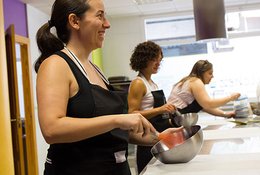
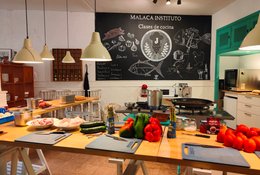
Many schools also offer optional activities after class. These might include conversation clubs, guided city walks, cooking workshops, or short cultural excursions. These give students the opportunity to practice what they’ve learned in a relaxed, social setting.
Summer programs are especially popular with students who want to combine learning with travel during the warmer months. Some schools also organize special sessions around holidays such as Easter, Christmas, or New Year, when the atmosphere of the destination adds something memorable to the experience.
Been thinking about truly committing to learning a language? Book a Language Course and take the first step to finally turn curiosity into confidence.
Language Courses are structured to help students make steady progress in a relatively short time. Days often begin with several hours of focused lessons, where teachers guide students through grammar, vocabulary, pronunciation, and conversation exercises.
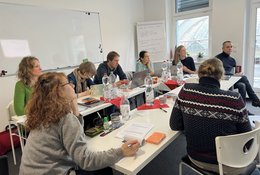
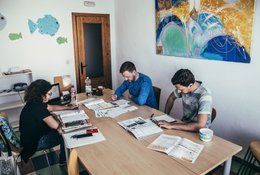
Classes typically take place in small groups, which encourages participation and allows teachers to adapt lessons to the level of the students in the room. Beginners might spend more time building foundational vocabulary and understanding basic sentence structures. Intermediate learners usually focus on expanding fluency and improving listening comprehension. Advanced students often work on more nuanced language skills, such as complex grammar or professional communication.
Teachers are qualified and are experienced, working with international groups where often motivation is high and patience for slow progress is low.
Practice also continues outside of the classroom. Conversation sessions, language labs, and interactive exercises often fill the rest of the learning schedule. Some programs include optional workshops or short excursions designed specifically to encourage students to use the language in real-life situations.
Accommodation can vary widely depending on the package. Budget-friendly courses often place students in shared student residences or simple guesthouses close to the school. Other programs include homestays with local families, which allow students to practice speaking even after class has ended. For those who prefer more comfort, certain schools offer accommodation in boutique hotels or upscale residences, creating a more luxurious learning environment. In some cases, all-inclusive options combine lessons, accommodation, and meals into a single package, making the experience simple and easy to organize.
Food is another important part of the experience. Students might share meals with their host family, eat together with classmates after lessons, or explore nearby restaurants during their free time. These moments often become some of the most valuable language practice opportunities, because conversations unfold naturally and without the pressure of a formal lesson.
Choosing where to go is, of course, determined by the language you want to study. Here are just some popular places to consider:
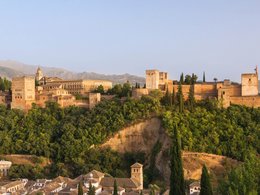
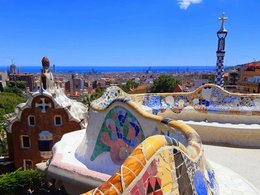
Spain is the world's most popular destination for Spanish Language Courses, though its role has evolved alongside a growing market in Latin America. Schools in cities like Salamanca and Madrid are renowned for teaching Peninsular Spanish (Castilian), the foundation of the language; however, learners should note that this dialect features distinct grammar and pronunciation that differs from the varieties spoken by the 90% of Spanish speakers living in the Americas. While Barcelona is a cultural powerhouse, its bilingual landscape means Catalan often takes precedence in daily public life, offering a unique sociolinguistic experience rather than pure Spanish immersion. Programs cater to every level and age group, with summer courses for children and teens running alongside adult courses. The lifestyle outside the classroom is exceptional, and the combination of excellent teaching, beautiful cities, good weather, and a Culture that actively rewards any attempt to speak the language makes Spain one of the best places to learn it.
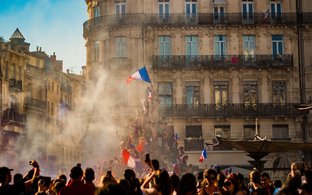
France is the obvious choice for French, and the quality of language education is consistently high. Paris attracts students who want the cultural experience of learning in the capital, with schools ranging from well-established institutions to small, boutique programs offering private tuition in gorgeous settings. But Lyon, Bordeaux, Montpellier, and Nice all host excellent schools with the added advantage of being slightly more manageable cities in which to use the language day-to-day. Summer courses for teenagers are particularly well-developed in France, with residential schools combining morning classes with afternoon activities in a structured environment. The food, as ever in France, needs no introduction — and eating it in the country where it's made, with the vocabulary to discuss it, is one of the better arguments for learning French in France.
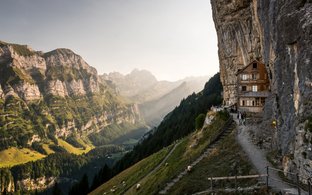
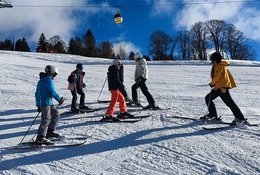
Switzerland offers something distinct: the possibility of learning French, Swiss-German, or Italian — sometimes all three — in a country where multilingualism is a fact of daily life. Geneva and Lausanne are the primary centres for French language study, with schools that attract a highly international student body and teaching that meets exacting Swiss standards. The environment is orderly, beautiful, and high-end. For professionals seeking intensive, high-quality instruction in a setting that takes learning seriously, Switzerland is the best option. Summer courses in the Swiss Alps combine language study with an alpine environment that makes the non-classroom hours feel like an entirely separate holiday.
Germany is an underrated choice for language learning that deserves more attention. German is the most widely spoken native language in Europe and carries significant professional value, yet the number of people who study it abroad remains surprisingly low relative to Spanish and French. Berlin, Munich, Hamburg, and Freiburg all host excellent language schools with strong reputations, and the directness of German culture — where people tend to engage patiently with learners and correct mistakes helpfully rather than switching to English — makes it one of the better environments for accelerated progress. Summer and autumn programs are popular, and the country's infrastructure makes it easy to move between cities if you want to experience more than one region.
Italy makes learning feel like a pleasure rather than a discipline, which is either a blessing or a hindrance, depending on how seriously you take your study schedule. Florence, Rome, Siena, and Bologna all host well-regarded Italian language schools, with options ranging from short intensive courses to semester-length options for those pursuing academic credentials. The motivation to speak Italian is built into every interaction, and the locals have a way of making any conversation feel like an achievement worth celebrating. Summer courses for adults and families are quite popular.
Portugal is a growing destination for Portuguese language study, driven partly by the language's extraordinary global reach, spoken across Brazil, Portugal, Mozambique, Angola, and beyond, and partly by Lisbon and Porto's emergence as two of Europe's most compelling cities to spend time in. Schools are smaller and less established than in Spain or France, but the quality of teaching is strong and the environment is genuinely immersive. Budget-friendly options make Portugal one of the most accessible Language Course destinations in Western Europe, and the combination of excellent food, warm hospitality, and a language that rewards consistent study makes it a strong choice for learners at every level.
China is worth serious consideration for anyone drawn to Mandarin — the most spoken language in the world by native speakers, and one of the fastest-growing choices among international learners. Beijing and Shanghai are the primary destinations for language study, with well-established schools offering structured Mandarin courses for every level. The immersion environment is total and immediate. Moreover, English is less of a fallback than in many destinations, which accelerates progress faster than most learners expect. It's a challenging language, and studying it anywhere other than China is, certainly, a harder road. Summer and autumn offerings are popular, and the growing number of all-inclusive options that combine accommodation, meals, and tuition make the logistics straightforward.
Japan rounds out the list as the destination for Japanese language study. The demand for Japanese language courses has grown significantly, and the immersion environment it provides is unmatched. Tokyo, Kyoto, and Osaka all host reputable language schools, many of them offering structured programs for international students that combine classroom instruction with a cultural context so rich and specific to the language that studying Japanese anywhere else feels slightly beside the point. Courses are typically intensive, well-organised, and demanding, which, for motivated learners, is exactly the point.
Ready to fully dive into using your favorite language in real life? Book a Language Course and take the first step toward true fluency.
A Tripaneer gift card is the perfect present for anyone interested in wellness, culture, and adventure. For any journey, near or far, choose between 17,500 experiences worldwide.
Over 300K wellness and adventure travelers like you have chosen Tripaneer for their unforgettable journeys so far. Hear what they have to say about us!
enjoyed through us worldwide
recommend booking with us
4.6 star average organizer score
“Amazing experience... most recommended”
 South Korea
“What an amazing experience I had a total reset💜”
 United States
“Yoga Teacher Training at Sundari was a wonderful experience.”
 United Kingdom